Inside the intensely competitive world of today's professional sliding, podium finishes is no longer exclusively a result of raw engine power or pilot bravado. Instead, it is now a multifaceted science which requires a scrupulous fusion of choosing a inherently capable car, equipping it with the most precise drift-spec parts, and, most essentially, grasping its live behavior on the circuit through advanced suspension tuning applications. This comprehensive guide functions as your roadmap starting from the very first idea of a drift build through to the final engineering-refined adjustments that elevate a strong vehicle into a consistent winner. We will thoroughly explore the methodical process of vehicle alignment optimization, showing how a advanced suspension tuning tool like GripDial eliminates approximation and delivers exceptional insight into your chassis's true behavior.
The cornerstone of any successful drift machine is, without question, the chassis itself. A select group of vehicles have earned legendary reputation within the global sliding community due to their built-in balance, durable construction, and the enormous ecosystem of aftermarket parts available. Selecting the optimal starting point is the initial and most significant decision a enthusiast will make. As an example, the the E36 generation BMW is commonly accepted as perhaps the the best overall drift platforms of history. Its almost ideal balanced front-to-rear weight, coupled with a rear-wheel-drive layout and bulletproof six-cylinder motors, establishes a platform that is both forgiving for newcomers and extremely effective in the hands of a expert pilot. The successor of this lineage, the BMW E46 platform, builds upon these qualities with a increasingly sophisticated chassis, increased stance for greater confidence, and yet increased lock directly from the OEM. A different formidable option in the professional scene is the Corvette C6.
This V8-powered sports car introduces a unique set of benefits to the drifting world, including a low-mass alloy chassis, a rear-mounted transaxle that helps create an perfect balance, and the tremendous torque of a powerful LS V8 motor. This fusion renders it an absolute force on track, able of initiating and holding continuous slides with seemingly easy application of power. For those desiring exceptional performance per dollar, the Nissan Z33 stands out as a excellent example. It is delivered from the manufacturer with a stiff platform, a decent OEM limited-slip differential, and the responsive VQ35DE powerplant that delivers sufficient power and torque for practicing and progressing in the discipline. Its successor, the Nissan Z34, presents more refinements in structural rigidity, suspension design, and outright motor power, cementing its position as a favorite pick among serious competitors. Further historic platforms that merit mention encompass the agile rotary-powered Mazda FC, the ever-present Nissan S13, the torque-rich Ford SN95, the more recent BMW E90, and the small yet incredibly playful and instructive MX-5 Miata. All of these platforms gives a different set of attributes, difficulties, and potentials, but they all share the core elements essential to serve as a serious drift machine.
However, picking the right car is just the beginning. To release the complete performance of any of these machines, major changes to the steering and chassis control systems are absolutely mandatory. This is where the realm of precision drift-spec components enters vital view. The most most impactful modification for a serious competition vehicle is the integration of a drift-spec steering angle kit. These sophisticated assemblies, like those manufactured by specialist companies like SLR Speed, are created to radically increase the vehicle's maximum turning lock. A factory production vehicle is highly constrained in how far its tires can rotate, a engineering compromise for daily driving. In sliding, conversely, aggressive steering input is continuously needed to manage and maintain a drift. An steering kit substitutes the OEM steering knuckles, rod ends, and potentially suspension arms with components that allow the wheels to achieve steering lock over 70 or even 80 degs, as opposed to a typical stock angle of around 40 to 50 degrees.
This tremendously expanded lock gives the operator with dramatically greater authority during a angle, allowing it to be considerably simpler to begin a drift, hold it through a sweeping corner, and transition fluidly from one side to the opposite. The difference in handling is absolutely revolutionary. Coupled with a correctly selected modification is the just as vital modification to the chassis's damping system. Generic or even expensive street adjustable suspension are simply not engineered for the particular and brutal requirements of drifting. A purpose-built system of coilovers is crucial. These engineered coilovers incorporate unique valving and spring stiffness that are designed for the violent weight transfer that is inherent of aggressive driving. When a driver begins a drift, the car's weight is shifted forcefully to the outer of the turn. Optimal drift-spec dampers control this shift in a controllable manner, allowing the car to find its balance promptly and giving the driver precise feel through the controls and cockpit. They furthermore allow for precise tuning of ground clearance, shock absorber rate, and weight balance, which are all integral aspects of dialing in the car's dynamics to a given venue or competition approach. Together, a high-quality drift angle kit and a correctly selected system of competition adjustable dampers constitute the undeniable physical base upon which all later tuning is built.
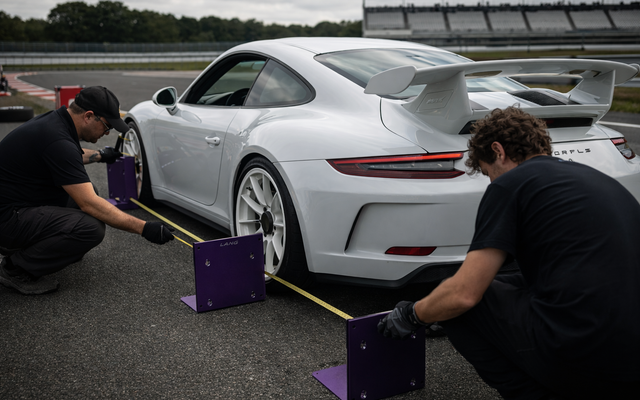
Once the fundamental parts is fitted, the subsequent critical phase in the project is the detailed adjustment of the chassis's alignment. This is the domain of car suspension tuning, a methodology that can seem overwhelmingly complex to the beginner but is, in fact, the defining factor to converting a collection of high-performance parts into a unified and controllable machine. The most critical parameter of suspension geometry for oversteer is definitely camber angle. Camber angle is the angle of the wheel compared to the perfectly straight plane when observed from the front of the chassis. If the upper part of the wheel is leaning towards the chassis, this is referred to as inward tilt. In sliding, an inward tilt on the front tires is generally used and is considered critical. The logic is fundamentally linked to vehicle dynamics.
When a chassis is turning at extreme sideways angles, the chassis rolls to the outer of the turn. This lean makes the outer steering tire to lose its best footprint with the tarmac. By applying an inward tilt, the wheel is pre-angled to compensate for this roll. As the chassis tilts into the turn, the tire becomes more upright against the road surface, optimizing its bite at the critical time when it is most required for directional command. Typically, front axle adjustments for a serious drift car range from approximately -3 degrees to as high as -5 degrees or even greater, based on the specifics of the car setup, compound selection, and driver feel. The back wheels also utilize inward lean, but the angles are generally more conservative and more nuanced than the front axle. Too much camber at the rear can cause the vehicle to extremely loose and challenging to predict on throttle input, as it shrinks the effective grip area of the driving tires during linear power delivery. Therefore, rear axle adjustments are often in the vicinity of -1 degree to -3 degrees, striking a careful equilibrium between giving enough side traction to help in initiating and maintaining the angle while still preserving good hook-up for exiting the corner. Camber is only one component of the more complex alignment picture, which additionally encompasses toe setting, caster, and steer correction adjustment.
Toe refers to the angle of the wheels when viewed from a bird's-eye view. Inward toe means the leading edges of the wheels are closer together than the rear edges, while outward toe means the converse. For drifting, a slight amount of front axle toe out is often used to improve the initial response handling feel, making the chassis feel more nimble and eager to begin a slide. Rear axle toe setting is usually set to zero or a extremely minute amount of positive toe to promote predictability under acceleration. Caster is the frontwards or backwards inclination of the steering axis when viewed from vehicle dynamics tool the side of the car. Increased caster angle enhances self-centering and high-velocity confidence, and it additionally adds to camber effect during steering, which is very beneficial. Tuning these settings is a intricate interaction where a change to one setting can and often will influence the remaining parameters. The conventional approach for dialing in a chassis's alignment for drifting has for a long time been a time-consuming affair of guesswork and adjustment. A driver or engineering group would introduce a adjustment based on a hunch, run the vehicle on track, rely on the pilot's subjective feel and comments, and then make another adjustment. This cycle would iterate again and again until the car felt "acceptable" or the scheduled testing period was exhausted. This methodology is not only extremely wasteful in terms of time and tires, fuel, and parts, but it is also deeply imprecise.
Driver sensation is a infamously unreliable measurement tool, colored by countless variables such as fatigue, evolving track surfaces, weather, and just the mindset of the pilot on that specific run. What feels "loose" on one pass might feel "pushing" on the following pass, leading to contradictory information and counterproductive changes. This traditional challenge in car suspension tuning is specifically where modern telemetry systems has intervened to completely change the process.
The development and adoption of sophisticated suspension tuning applications has ushered in a completely new paradigm for engineering and optimizing competitive drift machines. This new generation of systems, showcased by innovative products like data acquisition tools, function by physically recording the live mechanical behavior of the chassis as it is operated on the course. In contrast to using subjective feel, these devices acquire quantifiable metrics on essential parameters such as damper compression and extension, wheel speed, G-force loading, lock position, and throttle and brake application. This collected telemetry is then interpreted by powerful software that can graph and decode the information in a actionable format. For the first time, tuners and crews can observe exactly what the chassis is performing at each moment of a drift. This function changes the entire chassis setup process. Think about the specific challenge of optimizing the front axle negative camber for a particular car. Rather than applying a adjustment from -3 degrees to -3.5 degrees and then testing several runs to try and "sense" a change, a telemetry system can provide immediate and clear feedback. The software can display graphically how the suspension's contact patch is acting during the critical moments of a angle: initiation, sustain, and changing direction. It can demonstrate if the current drift suspension tuning guide angle is enabling the loaded tire to achieve ideal loading or if the compound is working inefficiently on its external shoulder.
The software can then provide empirical advice for modification. Perhaps the information indicates that the tire is still overloading its edge at -3.5 degrees of negative camber, implying that a move towards inward lean, say -4 degrees, might be warranted. On the other hand, the information might reveal that the tire is not coming up to heat or that the inside edge is degrading excessively, which could suggest that there is too much inward lean and a modest lessening back to -3.2 degrees would be more efficient. This standard of precision and actionable intelligence was completely unimaginable in the era of exclusively mechanical setup.
The benefit of utilizing a advanced drift telemetry system extends well suspension engineering beyond merely setting camber angles. It becomes an essential suspension tuning guide that is specific to your specific car. When fine-tuning the damping clickers on your coilovers, rather than relying on general advice or replicating another driver's settings, you can use the data to see how the car is performing in relation to your tweaks. The software can graph the suspension travel path over a lap, showing if the coilovers are controlling the chassis motion effectively or if they are permitting the vehicle to bounce too much after a direction change. It can assist in pinpointing challenges like excessive compression or excessive extension, enabling you to apply educated adjustments to preload settings, damping rates, or ride height. This process applies equally to the intricate task of car alignment tuning. In addition to camber, the tool can offer data into how changes to toe settings and caster angle are impacting the vehicle's balance during different phases of a slide. For example, it can allow you to determine the optimal amount of front axle toe out for your specific steering configuration and competition approach by analyzing the response time of initial reaction and the stability of the vehicle at maximum steering angle. This turns the system an incredibly useful performance optimization handbook that is dynamically calibrated by the live behavior of your own vehicle on the track. It shifts the whole project from a mysterious craft into a repeatable optimization exercise.
Additionally, the application of a system like GripDial is in no way limited to experienced engineers with vast budgets. For the club-level competitor, it serves as an powerful equalizer. It in essence gives the builder with the insight of a full-time race engineer without requiring the associated expense. It drastically shortens the tuning process by giving clear answers to challenges that would traditionally take seasons of experience to solve. A builder can understand how their individual chassis reacts to various adjustments, gaining a more intuitive understanding of suspension theory in the endeavor. It furthermore democratizes high-level suspension engineering principles, allowing all drivers with the desire to refine their machine to achieve it in a efficient and effective fashion. This is notably valuable in a discipline like drifting, where tuning expertise has historically been a highly secretive commodity among top crews. Now, that power can be in the garage of any serious builder.
In conclusion, the journey to engineering and optimizing the perfect high-performance sliding vehicle is a multi-stage mission that perfectly blends classic mechanical principles with cutting-edge telemetry solutions. It commences with the wise pick of a capable chassis, then enhanced by the integration of critical drift-spec hardware like drift-spec steering angle kits and properly selected performance coilovers. The journey then progresses into the intricate stage of alignment optimization, where values like camber angle, toe setting, and caster are carefully configured to complement the car's new geometry and the pilot's individual needs. The final step, and what genuinely distinguishes the today's process from the old ways, is the use of a advanced vehicle dynamics tool. This tool eliminates the approximation and waste of solely subjective adjustment by giving objective, real-time data on how the chassis is truly behaving. It serves as an incredible diagnostic aid, a definitive drift suspension tuning guide, and a all-in-one chassis development system. As a complete package, this complete philosophy guarantees that each and every element of the drift machine—from the selection of the car to the last click on the coilover—is perfected for ultimate success on the track. It embodies the total maturation of the sport of sliding, bridging raw pilot talent with surgical suspension engineering to create the perfect effective cars imaginable.